
What GPS Tagging of Domestic Abuse Offenders Really Means for Safety
In recent years, GPS tagging has become an increasingly important tool in the UK’s response to domestic abuse.
Used alongside restraining orders, bail conditions and victim safeguarding plans, electronic monitoring is designed to reduce re-offending, enforce exclusion zones, and strengthen protection for survivors.
But what does GPS tagging actually mean in practice for survivors, and for the community safety professionals working to keep people safe?
📍 What Is GPS Tagging?
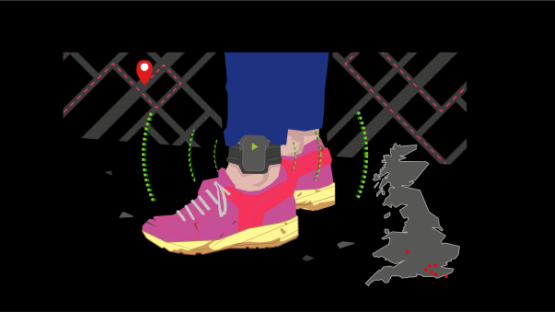
GPS tagging involves fitting an offender with an electronic device that tracks their location in real time. In domestic abuse cases, it is typically used to:
Enforce exclusion zones (e.g. preventing an offender from approaching a survivor’s home, workplace or children’s school)
Monitor compliance with court orders
Provide early alerts to police when conditions are breached
Act as a deterrent, reducing repeat offending
Unlike older curfew-based tagging, GPS monitoring allows authorities to understand patterns of behaviour, not just whether someone is at home during set hours.
📊 Does GPS Tagging Reduce Re-Offending?
Evidence from UK pilot programmes and international studies consistently shows that GPS tagging can reduce re-offending when used as part of a wider safeguarding approach.
Key findings highlighted by the UK Home Office and the Ministry of Justice include:
Lower rates of breach of restraining and non-molestation orders
Improved police response times when breaches occur
Greater offender compliance when monitoring is combined with supervision and support
Increased survivor confidence in safety planning
Crucially, GPS tagging works best not as a standalone solution but as part of a coordinated, multi-agency response.
🧠 What This Means for Survivors
For survivors, GPS tagging can provide:
Reassurance that boundaries are being actively enforced
Faster intervention if an offender breaches conditions
Greater confidence to rebuild routines: travelling to work, school, or appointments
A sense that concerns are being taken seriously
That said, it’s vital to be clear: GPS tagging is not foolproof. Survivors still need access to clear reporting routes, safety planning, and trusted support networks.
Technology should support empowerment - not create false reassurance

👥 What This Means for Community Safety Practitioners
For councils, VAWG leads, housing providers, transport partners and frontline services, GPS tagging introduces both opportunity and responsibility.
It requires:
Clear communication with survivors about what tagging can and cannot do
Strong information-sharing protocols between police, probation and local partners
Accessible ways for victims to raise concerns quickly if they feel unsafe
Consistent community-based support, not just enforcement
Organisations such as the National Police Chiefs' Council have repeatedly emphasised that monitoring technology must sit within a wider ecosystem of prevention, early intervention and survivor-led safeguarding.
📲 Why Digital-Enabled Protection Matters
As safeguarding increasingly blends physical interventions (like tagging) with digital communication, the focus must remain on clarity, accessibility and trust.
That’s where platforms like imabi play a complementary role - HELPING communities:
Share clear, trusted safety information
Provide simple reporting routes for concerns
Support joined-up communication across services
Reduce barriers to speaking up
Technology doesn’t replace frontline services but when used well, it helps ensure no concern is missed and no one feels isolated
