A customer makes repeated sexual comments to someone behind the counter. A client sends inappropriate messages after a home visit. An employee says nothing because they know how much the business depends on that account.
For a small business owner, these situations can be difficult to handle. Clear expectations, accessible reporting and a plan for responding help you protect staff and address problems early.

From 30 October 2026, the Employment Rights Act 2025 strengthens employers’ harassment duties in England, Scotland and Wales. Here is what has changed and five practical priorities for your business.
What are the new harassment duties for small employers?
Employers must now take all reasonable steps to prevent sexual harassment at work, strengthening the duty introduced in October 2024.
Employers can also face a tribunal claim where a customer, client, supplier or other third party harasses an employee and the employer failed to take all reasonable steps to prevent it. This covers sexual harassment and harassment related to age, disability, gender reassignment, race, religion or belief, sex and sexual orientation.
The existing preventative duty already covered sexual harassment by third parties. The changes strengthen that standard and introduce direct employer liability for third-party harassment.
Small businesses are included. What steps are reasonable depends on your circumstances, including the risks, work you do and resources available. There is no single checklist that guarantees compliance.
Our Employment Rights Act 2025 employer guide explains the legal changes in more detail.
Five harassment prevention priorities for small businesses
-
Start with the working day. Do staff serve customers alone, work late shifts, visit clients’ homes or receive messages on personal phones?
Ask your team where they have experienced inappropriate behaviour or felt uncomfortable. Include part-time, temporary and younger staff, who may be less confident about speaking up.
Record the risks and decide what action is needed, who will take it and when. Review this when work changes or a concern is raised.
-
Staff need to know that keeping a customer happy does not mean accepting harassment.
Set out acceptable behaviour in your policy and communicate it to customers, clients and suppliers where appropriate. Depending on your business, that could mean a notice at reception, booking terms or contract wording.
Decide who can step in, end an interaction or restrict future contact. An employee dealing with an abusive regular customer should know how to get support without having to improvise.
-
“Come and talk to me” may feel sufficient when you know everyone. But what if the concern involves you, another manager or your biggest customer?
Give staff more than one way to raise concerns, including an alternative to their usual manager. Explain who receives reports, how information is handled and what happens next.
Consider an anonymous option. It can help people raise concerns, although the circumstances may identify someone in a small team and limited information can make investigation harder.
-
Anyone receiving a concern should know how to listen, consider immediate safety, arrange support and follow up fairly. Staff should understand that raising a concern will not be held against them.
Use training suited to the situations your business encounters. Check that people understand it and review whether it remains effective.
Know where you would obtain external HR or legal advice, particularly if a concern involves someone who would normally handle complaints.
-
Keep a proportionate, secure record of risks, training, reports, decisions and actions. Limit access to sensitive information.
Look for patterns. Are concerns linked to one customer, a particular shift or staff working alone? Has the same issue returned after you thought it was resolved?
Use what you learn to change working arrangements and strengthen prevention. Recording a concern is the start of responding to it.
How imabi supports small employers
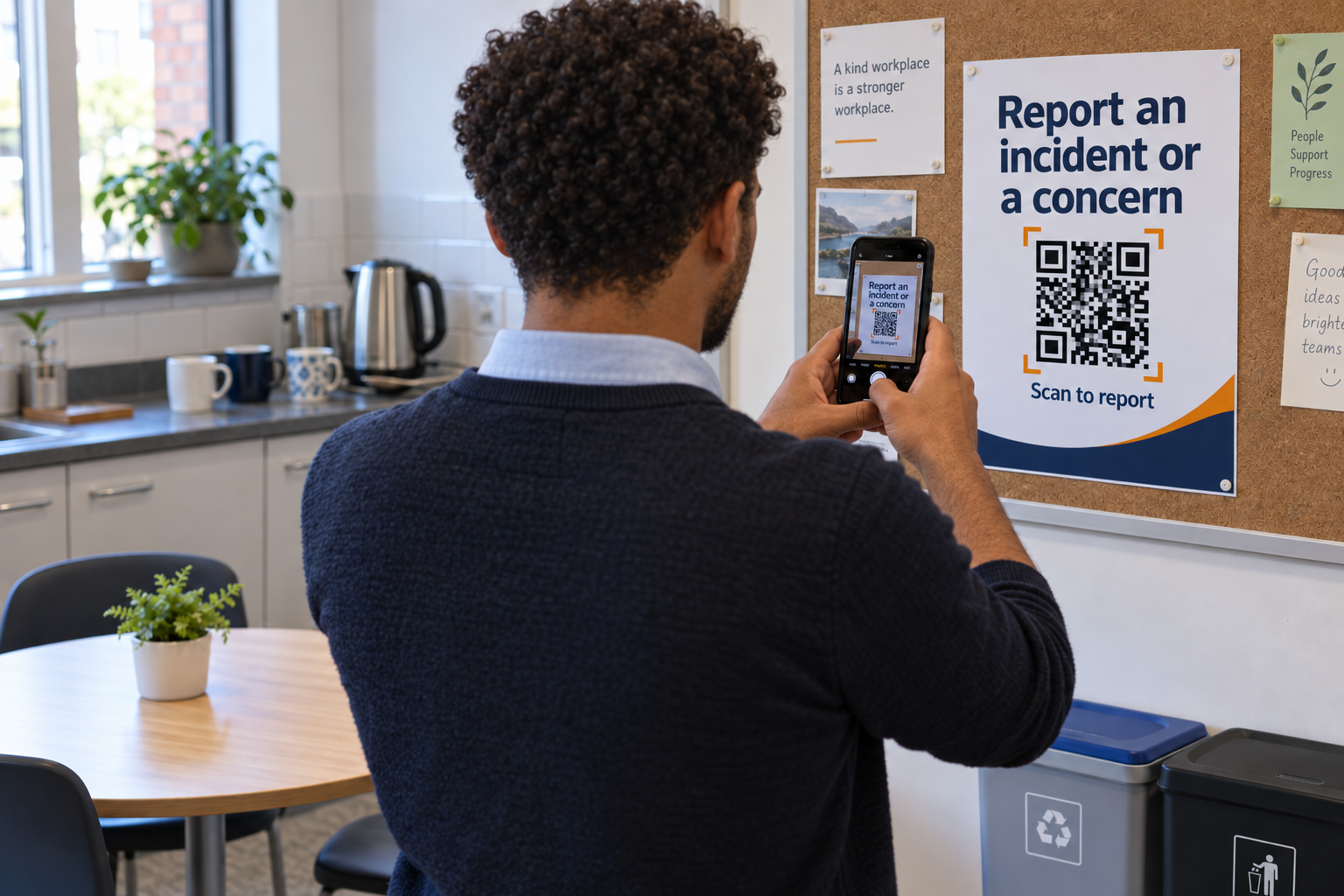
imabi gives staff a way to report concerns through a link or QR code, without downloading an app, with anonymous reporting where appropriate.
Your business can manage reports in a dashboard, link concerns to sites or locations, identify recurring issues and record actions. This supports your work on policies, training and risk assessments.
Reporting solutions start from £29 per month.
Official guidance for employers:
Read Acas guidance on preventing sexual harassment and the government’s explanation of the harassment law changes.