

Community Asset Mapping
Helping people find local support, equipment and facilities
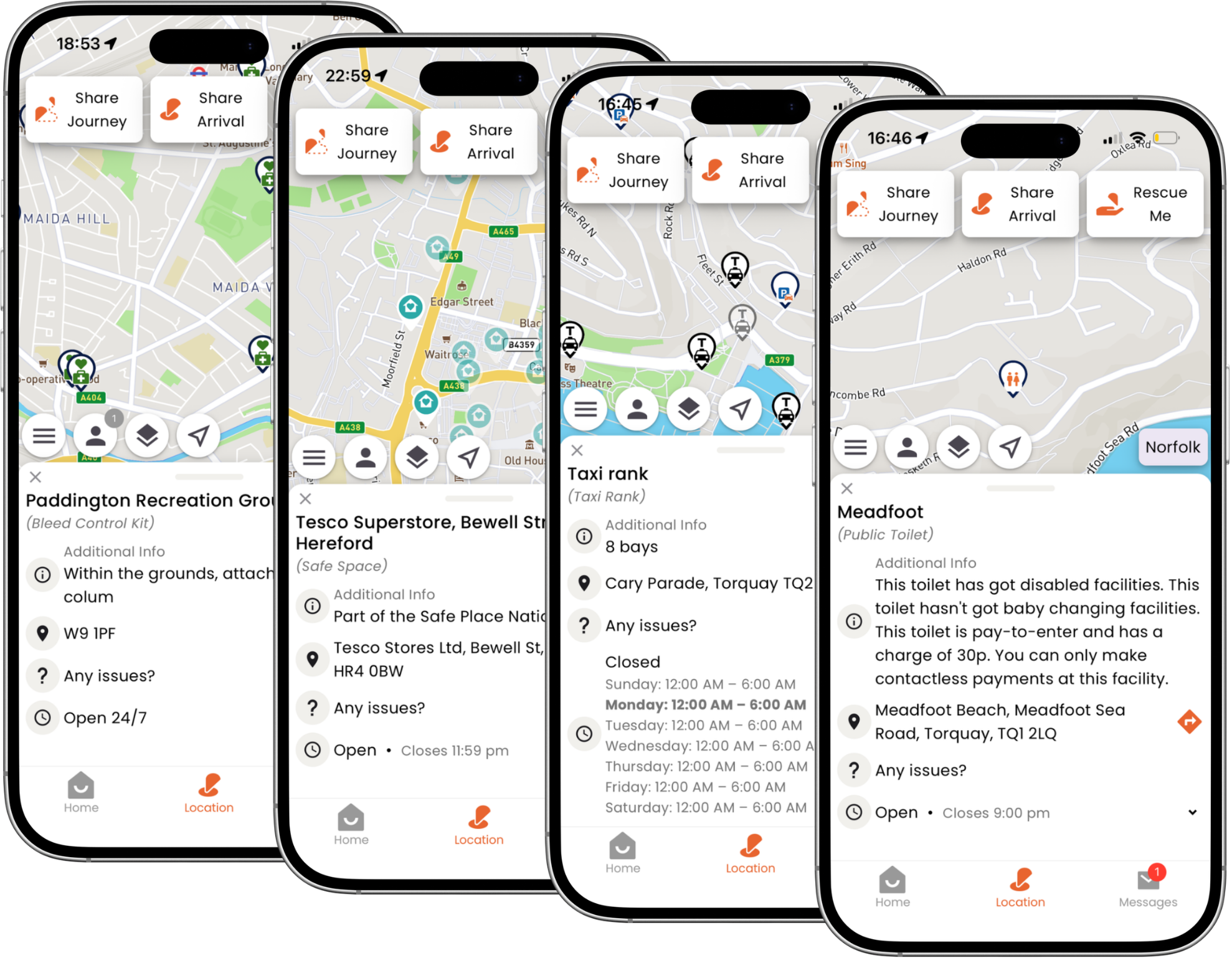
From Safe Places and Safe Havens to bleed kits, defibrillators and taxi ranks, imabi helps councils, BIDs and community organisations put local support, equipment and facilities on the map.
Our imabi map layer, available through Travel Guardian, helps residents and visitors discover what’s nearby, explore an area before they visit and find useful information when they need it.
Whether you’re launching a new scheme or bringing an established network of community assets together, we’ll work with you to make those locations more visible, easier to find and ready to share.
What can we map?
We can map a wide range of community assets, helping people quickly see what support, facilities and useful services are available around them.
Safe spaces
Help people discover venues where trained staff can provide assistance, including Safe Places, Safe Havens and other organised local schemes.
Locations can include information about the support available, opening hours and access arrangements, helping people understand where they can go and what to expect.
Safe space mapping is provided free of charge for organised schemes with trained staff at participating venues.
Emergency equipment
Make the locations of bleed kits, defibrillators and river rescue equipment more visible to the communities they serve.
We work with partners to gather location and access information, including any restrictions on when equipment is available. Mapping provides an additional way to find this information, alongside relevant official registers and emergency service guidance.

Transport and community facilities
Help residents and visitors find taxi ranks, bus stops and other useful local facilities.
Mapping can support information about a town centre, visitor destination or wider community.
If you have other assets you would like to include, we can discuss the locations, the information people need and the scope of the work.

Working with your organisation
You may already have a list of locations ready to share, be preparing to launch a scheme or want to bring several datasets together.
We work with you to establish which assets should be mapped and what information is needed. This typically includes names, addresses or coordinates, descriptions, access details and opening hours where relevant.
We also agree how updates will be shared, so changes to locations and availability can be reflected on the map.
Safe space mapping is free for eligible schemes. Other community asset mapping requirements are discussed and scoped with you before work begins.

Supporting awareness as well as mapping
Once your locations are mapped, we can help you tell people about them.
Depending on the project, this can include news articles, social content and materials for your own communications. We can support a launch, introduce newly added locations or help bring fresh attention to an existing scheme.
For councils and BIDs, that could mean content for resident newsletters, business updates and visitor information. For charities and scheme coordinators, it could mean materials to share with participating venues and community networks.

Let’s put your community assets on the map
Launching a safe space scheme?
Coordinating bleed kits or defibrillators?
Looking to make local facilities easier to find?
Tell us what you would like to map. We’ll help you explore the options, identify the information needed and agree the next steps.