A year after the law came into force, how are employers doing and what should they focus on next?
It’s now been a full year since the Worker Protection (Amendment of Equality Act 2010) Act came into effect on 26 October 2024.
For many employers, that milestone is a reminder that the duty to prevent sexual harassment is not optional: it’s a legal and moral expectation. The first 12 months have been about awareness, adjustment and, in some cases, catching up.
In this blog, we’ll look at what’s changed, what’s working well, where the gaps still are, and what you can do to stay ahead as the bar continues to rise.
A quick recap: what the Act actually requires
The Worker Protection Act amends the Equality Act 2010 and introduces a new legal duty for employers to take reasonable steps to prevent sexual harassment of their employees in the course of employment.
In simple terms, it means:
Don’t just react when something happens: plan and act to stop it happening in the first place.
Employers need to be able to show evidence of what they’ve done, such as policies, risk assessments, training and communications.
Failing to take reasonable steps could now lead to up to a 25% uplift in tribunal awards and potential enforcement by the Equality and Human Rights Commission (EHRC).

What about third-party harassment?
Under Section 40A(1) of the Equality Act 2010 (as amended), the duty applies to “sexual harassment of employees in the course of their employment.” There is no explicit wording in the legislation about customers, clients or members of the public, meaning the Act does not itself create direct employer liability for harassment by third parties.
However, the EHRC’s official guidance (September 2024) makes clear that employers are expected to anticipate and mitigate risks of sexual harassment from third parties where relevant.
“Employers should identify and take reasonable steps to prevent sexual harassment by third parties such as customers, clients, contractors or service users where there is a realistic risk that this may occur.” - EHRC, Preventing Sexual Harassment at Work: Your Legal Duties (2024)
In practice, that means organisations with customer-facing, public-facing or partner-facing roles should still assess and manage those risks through training, supervision, and clear reporting routes, even though the statute stops short of reinstating the old “third-party harassment” liability repealed in 2013.
Year one: what’s changed in practice?
The positives
Awareness has grown. The Acas helpline recorded a 39% increase in calls about workplace harassment between January and June 2025 compared with the same period the year before, according to data analysis by legal firm Nockolds (quoted in personneltoday.com)
Many employers have updated their policies, reviewed risk and run new training programmes, showing a move from reaction to prevention
The challenges
Not everyone’s there yet. A survey undertaken by Worknest suggests 41% of employers still haven’t completed a sexual-harassment risk assessment, and 54% worry they haven’t done enough (quoted in peoplemanagement.co.uk)
Some organisations are still relying on generic policies and one-off e-learning according to law firm Harper James, which may not be enough to demonstrate “reasonable steps” (harperjames.co.uk)
Enforcement is still bedding in, so many businesses assume they have time; but that could be a costly assumption once tribunal decisions start shaping expectations according to law firm Halborns (halborns.com)

What this means for you
If your organisation hasn’t fully embraced the prevention-first approach, you’re not alone, but the risks are real:
Legal and financial: tribunal awards and potential EHRC enforcement
Cultural: disengaged employees, reduced trust and morale
Reputational: being seen as complacent on harassment or equality issues
The good news? Getting it right is absolutely achievable and it brings wider benefits to culture, retention and brand reputation.
What “good” looks like in 2025
Here’s what forward-thinking employers are doing now:
1. Refreshing policies and procedures
Keep your sexual-harassment policy clear, visible and up to date. Don’t just store it in a handbook. Make sure people know how to report concerns (anonymously if possible), how those reports will be handled, and what support is available. If your staff regularly interact with the public or external partners, include clear expectations for third-party behaviour and reporting options.
2. Carrying out risk assessments
Look honestly at where risks could arise:
Social events
Business travel
Hybrid or remote working
Client-facing environments
Document your findings, identify gaps, assign actions and review regularly. Having a paper trail helps prove you’ve taken those “reasonable steps”.
3. Making training meaningful
Generic tick-box training isn’t enough. Use real scenarios, interactive learning and sector-specific examples. Train line managers properly so they can handle reports confidently and model the right behaviours. Then keep it alive: refresh annually and measure impact.
4. Building a respectful culture
Policies and training only go so far without the right culture. Encourage bystander confidence - people feeling safe to challenge inappropriate behaviour. Make sure leadership visibly supports the message and celebrates progress.
5. Tracking, reviewing and improving
Monitor your data: reports, outcomes, staff feedback. Schedule an annual review of your policies, training and risk assessment. Adapt quickly if patterns or new risks appear as the workplace landscape keeps changing.
6. Preparing for future enforcement
Tribunals take time to build case law, but the expectation is already clear: do more than the minimum. If you’re in a higher-risk sector (for example, hospitality, retail, transport or events), the “reasonable steps” test will likely be interpreted more strictly. Keep records, show progress and don’t wait for a test case to force change.

What’s on the horizon?
The Employment Rights Bill, currently progressing through Parliament, proposes to raise the standard even higher, from “reasonable steps” to “all reasonable steps.” It would also re-introduce direct liability for third-party harassment (such as from customers or clients).
If passed, that would mean employers need to go further in demonstrating that every reasonable preventive measure, not just some, has been taken. The Bill isn’t law yet, but it signals the direction of travel: stronger expectations, clearer accountability, and greater protection for workers.
Why now is the time to act
The first year may have felt like a settling-in period, but that grace window is closing. Culture change takes time, and regulators will soon expect evidence that prevention is real, not just promised.
Starting now helps you:
protect your people and your reputation
strengthen your legal defence
build a workplace where everyone feels respected and safe
stay ahead of the move toward “all reasonable steps”
Final thoughts
One year on, the Worker Protection Act has already made an impact. Awareness is up, conversations are happening, and more employers are taking prevention seriously, but there’s still work to do.
The Worker Protection Act sets the bar, but the real goal is a culture where every person feels safe and respected. Acting early shows integrity, strengthens confidence and builds a workplace people want to be part of.
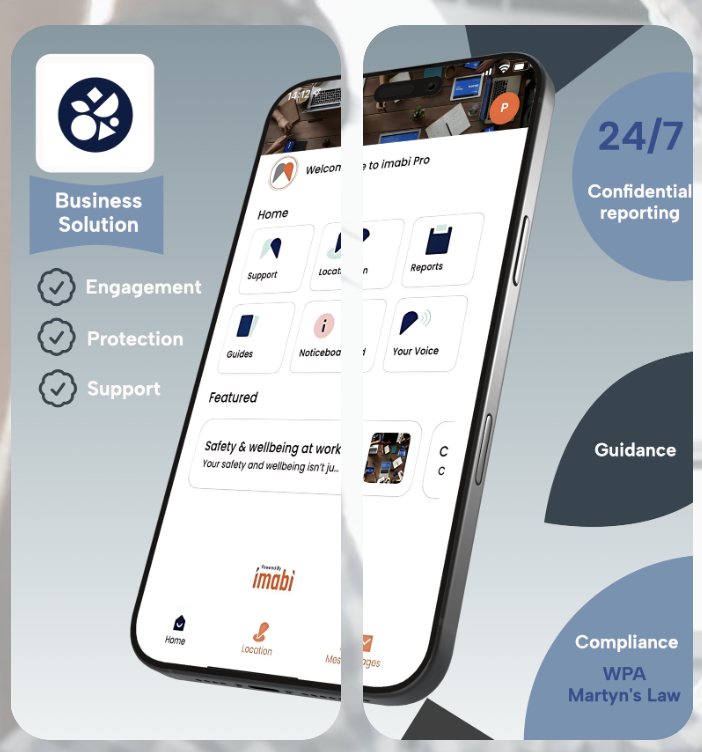
How imabi Pro helps
imabi Pro gives employers a simple, effective way to put their Worker Protection Act duties into practice. With tools for anonymous or named reporting, access to trusted supports and guidance, and a built-in audit trail to evidence reasonable steps, it helps organisations strengthen compliance, improve visibility, and protect their people.